

7 min read
Digital Credentials and ID Wallets in Higher Education
August 11, 2024
Digital transformation in higher education is a comprehensive shift that involves integrating digital technologies into all aspects of the educational experience.
As leading institutions, you have the unique opportunity to harness this transformation, not simply by adopting new tools but by fundamentally rethinking how education is delivered, accessed, and experienced.
One significant aspect of this shift is the rise of digital credentials.
What Are Digital Credentials?
Digital credentials are, in simple terms, the electronic counterparts of physical documents. They provide information about a person or entity, such as qualifications, achievements, or other claims.
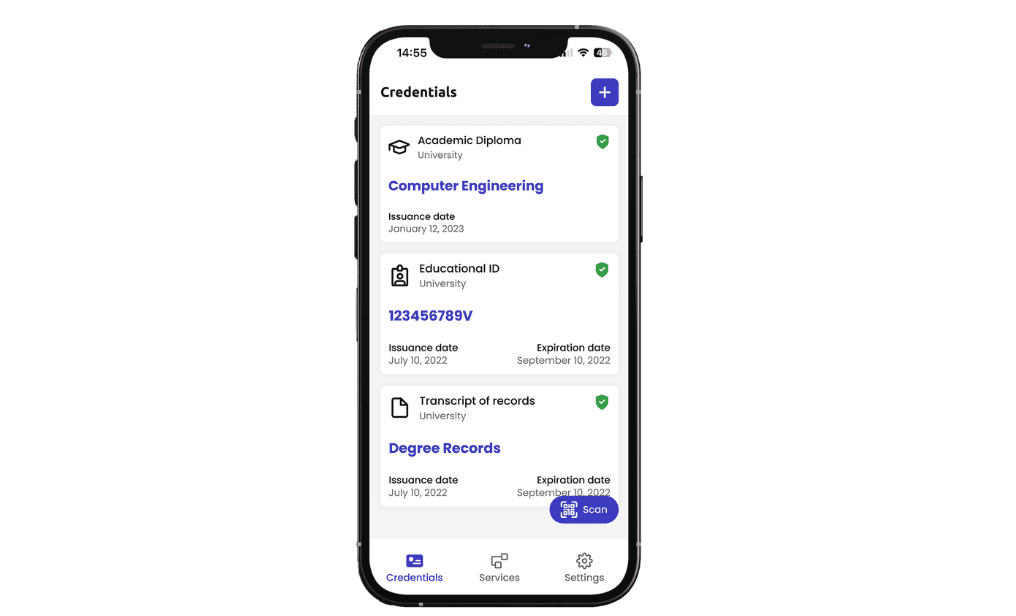
These credentials can be shared online and, in education, are typically used to validate a person's education, professional qualifications, skills, or competencies. Examples include student IDs, academic diplomas, transcripts of records, micro-credentials, etc.
However, not all digital credentials are equally secure. Some, like PDF or JPEG certificates sent via email or badges without cryptographic security, can be easily duplicated or forged, much like traditional paper documents.
For universities to truly leverage the benefits of digital credentials, it's important to implement solutions that adhere to the highest security standards. This is where verifiable credentials step in.
Introducing Verifiable Credentials
Verifiable credentials are a type of digital credential designed to be highly secure and easily verified using advanced cryptography. This technology ensures that the credentials cannot be altered or forged and allows organizations to automatically verify their authenticity without relying solely on trust in the issuer.
Moreover, a differentiator of verifiable credentials is that they are designed to be easily shared, stored, and managed through ID wallets. These wallets store credentials locally on mobile devices, giving users complete control over their personal information.
For educational institutions, this means student cards, diplomas or transcripts can be issued directly to students' phones as verifiable credentials. Students can then hold these academic credentials and share them with potential employers, other educational institutions, or government services, which instantly verifies them.
Why use ID Wallets and Digital Credentials in Education?
Imagine a scenario where Sarah, a recent graduate, is applying for a master's degree at a different institution. She must provide the new university with proof of her bachelor's degree, transcripts, and other qualifications.
Sarah contacts her undergraduate university to request these documents, which takes several weeks and incurs a cost.
Once she receives the documents, Sarah sends them to the new university's admissions office, which then needs to verify their authenticity by contacting Sarah's undergraduate registrar.
This process delays Sarah's application, causing frustration for her and administrative headaches for both universities. It is not only slow and costly but also prone to errors and fraud. Paper documents can be lost, damaged, or forged, making verification unreliable.
Additionally, centralized databases used in current credentialing systems are vulnerable to data breaches, compromising students' personal information.
ID wallets and verifiable credentials solve these challenges.
Benefits of Using ID Wallets and Digital Credentials in Education
A. For Universities
-
Reduced Administrative Burden: Automated processes for instant issuance and verification of credentials free up university staff to focus on other critical tasks.
-
Fraud Protection: Verifiable credentials are cryptographically secured to automatically verify data authenticity, ensuring they cannot be altered or forged.
-
Legal Compliance: ID Wallets achieve legal compliance with data protection and eID regulations by giving users greater control over their data, including eIDAS 2.0 in Europe.
-
Increased Security: ID wallets use biometrics, strong encryption, and distributed storage for maximum security. Personal information is never stored in the blockchain.
-
Enhanced Student Experience: Students already use their phones for everything. Why not extend this convenience to their data and academic credentials while increasing security and privacy?
-
Operational Savings: Universities can reduce operational expenses related to identity verification, compliance, and data storage, making the system more cost-effective.
B. For Students
-
One-Click Sharing: Students have instant access to digital and physical services with just one click, making it easier to share their credentials when applying for jobs, programs, and courses.
-
Portability: Digital credentials enable students to securely store and carry their credentials on their phone app, allowing them to bring their qualifications anywhere.
-
Global recognition: Verifiable credentials adhere to international standards, ensuring they are recognized and accepted globally.
-
Data Control: With ID Wallets, students can fully manage their data, choosing what information to share, when, and with whom. They can also opt to disclose only specific details, such as Sarah sharing just her degree and transcript without revealing her entire academic history.
-
Robust Protection: Verifiable credentials are fortified with cryptographic security so they can trust that their personal information remains secure.
How It Works in Practice
1. Issuance
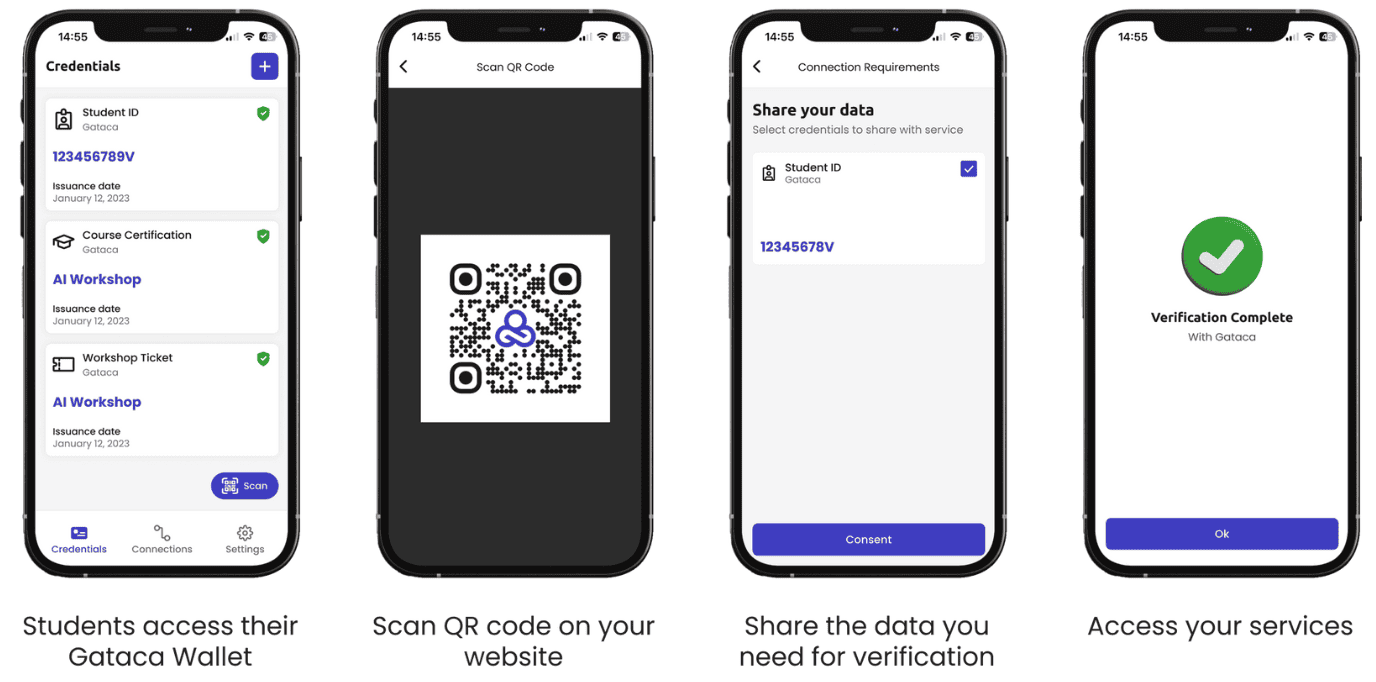
After graduating, Sarah receives her digital diploma and transcripts directly in her ID wallet (Gataca Wallet) from her undergraduate university. These credentials are cryptographically signed.
2. Presentation and Verification
When applying for her master’s program, Sarah can easily share her digital diploma and transcripts. She scans a QR code on the admissions office website through her ID wallet and shares the requested information with a single click.
The admissions office then verifies the credentials' authenticity in real-time using a verification platform (Gataca Studio), which checks the cryptographic signature to confirm the data’s authenticity and the issuer's legitimacy.
3. Management
Sarah keeps her credentials in her ID wallet. She can view and manage them, including choosing when to share them and stopping a service from accessing them.
Use Cases in Higher Education
Student Admissions and Enrollment
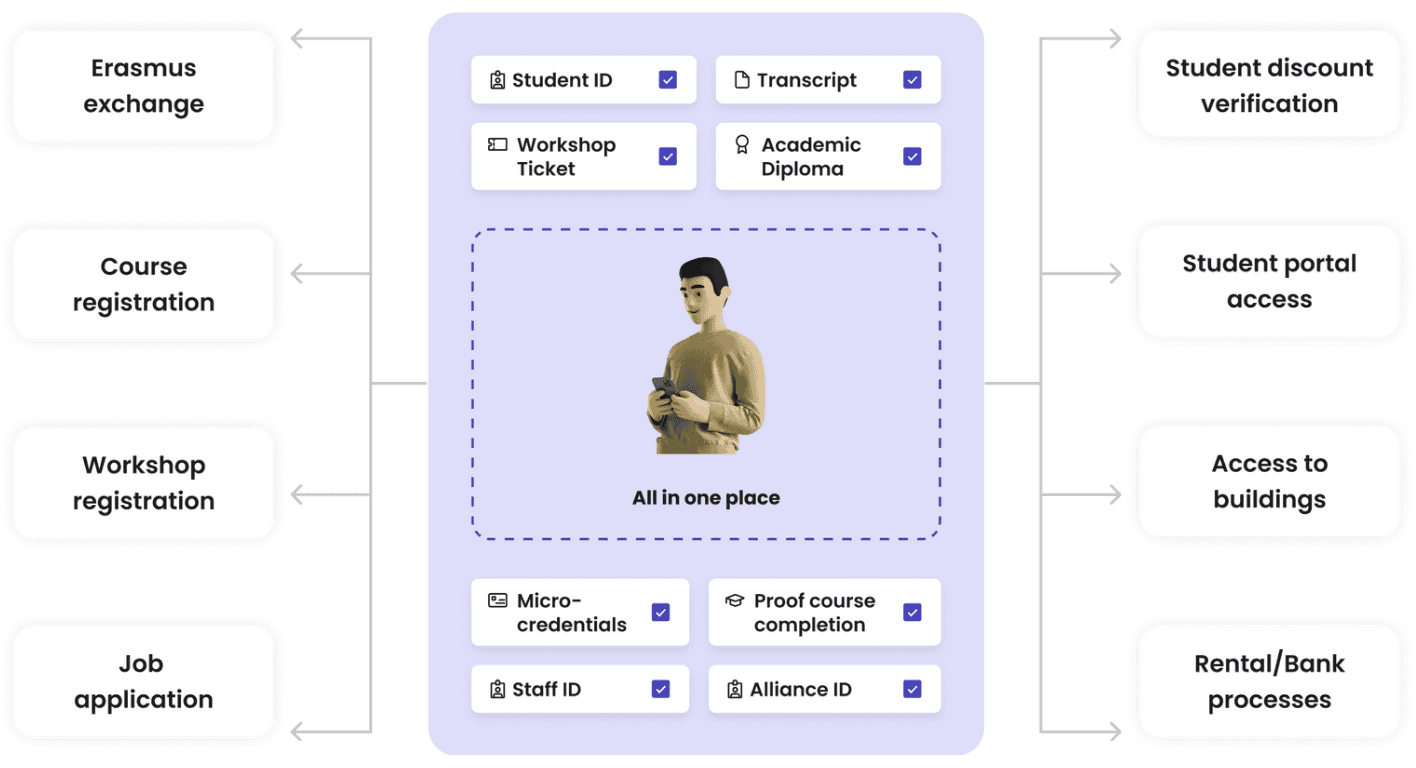
Verifiable credentials and ID wallets can transform student admissions from a tedious to a simple process with just a few clicks.
Students can store their academic credentials and personal information in an ID wallet. When applying to universities, they share these credentials with admissions offices, eliminating the need for physical documents, reducing the risk of fraud, and speeding up the decision-making process.
Access to Campus Services
Once enrolled, verifiable credentials can grant students access to campus facilities and services, such as libraries, labs, and canteens, without the need for multiple physical cards.
Consider a student needing to borrow a book from the library. With an ID wallet, they can scan a QR code to verify their identity and check out the book. Similarly, only students with the required credentials in their ID wallet can gain entry to secure areas like research labs, enhancing campus security.
Job Applications
With verifiable credentials, the transition from education to the workforce can be seamless. Students can compile their diplomas, academic achievements, certifications, and other relevant experiences into their ID wallets as they prepare to graduate.
When applying for jobs, they can easily share these verified credentials with potential employers. Employers benefit from the assurance that the information is accurate and can make faster, more informed hiring decisions.
Introducing the Higher Education Program
Preparing for implementing identity verification and authentication through digital credentials and identity wallets is a multifaceted process that requires a holistic approach to address data privacy, security, and user experience.
This process can be time-intensive from start to finish. However, we have the perfect solution for your educational institution: the Higher Education Program.
The Higher Education Program offers universities and colleges an exclusive opportunity to implement ID Wallets and digital credentials through a one-year guided program.
What offers the Program?
- Dedicated Success Team
Our expert team will support you through the entire process, providing a guided plan and step-by-step resources.
- Global Innovation Hub
Join a community of universities driving digital transformation to interoperate and collaborate with each other.
- Universal Interoperability
Ensure recognition of your digital credentials across institutions and countries by adhering to industry standards.
- Exclusive Pricing
Access an all-in-one decentralized identity solution at a significantly discounted rate, exclusive to program participants.
Do we have your interest peaked? Learn more about the Higher Education Program.

Esther Saurí
Digital Marketing