

6 min read
eIDAS 2.0 & EUDI Wallet Timeline: Key Dates, Current Status, and What to Expect in 2026
March 25, 2026
eIDAS 2.0 (Regulation EU 2024/1183) entered into force on 20 May 2024. Member States must provide EUDI Wallets within 24 months of the Implementing Acts being adopted making the practical mandatory deadline late 2026. Large online platforms and organisations in regulated sectors must then accept the wallet as an authentication method within one additional year.
What is eIDAS 2.0?
eIDAS 2.0 is the updated European framework for electronic identification and trust services. Officially known as Regulation (EU) 2024/1183, it replaces the original eIDAS Regulation (No 910/2014) and introduces the European Digital Identity (EUDI) Wallet as its flagship component — a standardised, government-issued digital identity app available to every EU citizen, resident, and business.
Member States can offer a wallet directly themselves, mandate an external party to create a wallet, or recognise a wallet created by the private sector.
For a full breakdown of the regulation's scope, compliance obligations, and business benefits, see our dedicated guide → eIDAS 2.0 Explained: Steps to Ensure Compliance
eIDAS 2.0 Full Timeline: From Proposal to Mandatory Rollout
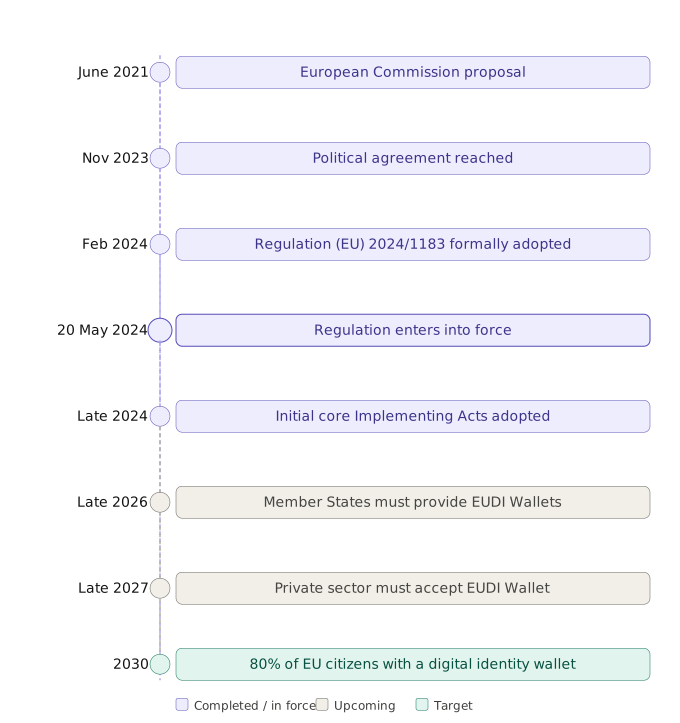
The following milestones chart the regulation from its origins to the dates that matter for your organisation:
- June 2021 — European Commission publishes proposal to update eIDAS. The revision signals a shift toward a unified digital identity infrastructure across the EU.
- November 2023 — EU Parliament and Council reach political agreement on the final text of the regulation.
- February 2024 — European Parliament formally adopts Regulation (EU) 2024/1183.
- 20 May 2024 — Regulation enters into force. The legal clock starts. This is the baseline date for all subsequent deadlines.
- Late 2024 — Initial core Implementing Acts adopted. These contain the technical specifications, security standards, and interoperability rules for the EUDI Wallet. Member State deadline is ~24 months after key acts enter into force.
- Late 2026 — Member States must provide at least one certified EUDI Wallet to citizens and businesses. This is the first major hard deadline.
- Late 2027 — Obligated private-sector organisations, including banking, healthcare, telecoms, and large online platforms, must accept the EUDI Wallet as an authentication method.
- 2030 (target) — EU objective: 80% of European citizens equipped with a functional digital identity wallet.
Current Status of eIDAS 2.0: What's Happening in 2026
Last reviewed: March 2026
- Several Member States have launched national EUDI Wallet implementations ahead of the formal deadline, including France (France Identité), Austria (eAusweise), and Italy (IT-Wallet), and many others have announced their development. For a snapshot of the EUDI Wallet initiatives, see our dedicated article → A Global Snapshot of ID Wallets
- Implementing Acts are in advanced stages of review. Although the first core implementing acts were adopted in late 2024, additional rounds followed in 2025, covering areas like relying parties, trust services and attestations so the framework is well underway and usable for pilots and early builds. However, some implementing acts are still under development or consultation and will come throughout 2026 (e.g. certification schemes).
- Large Scale Pilots are testing the EUDI Wallet and providing real-world feedback shaping the final ARF specifications. Two Large Scale Pilots are currently active, with four having concluded their work. Gataca participates currently in the WE BUILD Consortium and has previously been part of the DC4EU and VECTOR consortia.
- The ARF (now in version 2.8) is a collaboratively developed “toolbox” document that guides how to implement the wallet in practice with architectural plans & best practices. It is continuously refined via member State input, large scale pilots and industry feedback. One of the most important debates currently ongoing in the ARF is about privacy vs traceability (and architecture choices) as some concerns remain about potential linkability.
- Private-sector organisations are advised to begin integration planning now to prepare for the 2027 deadline and avoid operational disruption and compliance exposure.
FAQs About the eIDAS 2.0 Timeline
Is eIDAS 2.0 already in force?
Yes. Regulation (EU) 2024/1183 entered into force on 20 May 2024. However, the practical obligations for Member States begin in late 2026, and for private-sector organisations in late 2027.
When must Member States provide the EUDI Wallet?
Member States must provide at least one certified EUDI Wallet in late 2026. They can offer a wallet directly themselves, mandate an external party to create a wallet, or recognise a wallet created by the private sector.
When must organisations accept the EUDI Wallet?
Obligated organisations have an additional 12 months after Member States launch their wallets. Based on current estimates, this means late 2027. The obligation applies to regulated sectors (banking, healthcare, telecoms, energy, transport, education) and very large online platforms with over 45 million EU users.
What is Regulation (EU) 2024/1183?
Regulation (EU) 2024/1183 is the official legal identifier for eIDAS 2.0, the amendment to the original eIDAS Regulation (No 910/2014). It establishes the legal basis for the European Digital Identity Framework, including the EUDI Wallet, new categories of trust services, and the mandatory acceptance requirements.
Does eIDAS 2.0 apply outside the EU?
The regulation applies to EU Member States and organisations operating within the EU. Non-EU organisations serving EU users, particularly very large online platforms, may fall within scope. Additionally, several non-EU countries are exploring interoperability arrangements with the EUDI Wallet framework.
How to Prepare for the eIDAS 2.0 Deadline: A Practical Checklist
Organisations should not wait for the mandatory deadlines. Here are the steps to take now:
- Assess your scope: Determine whether your organisation falls under the mandatory acceptance obligation — check the sector list (banking, healthcare, telecoms, energy, transport, education) or whether you operate a platform with 45M+ EU users.
- Review the ARF: Familiarise your technical teams with the EUDI Wallet Architecture and Reference Framework (ARF). This document defines the standards your systems will need to support, including W3C Verifiable Credentials and ISO/IEC 18013-5.
- Audit your current identity stack: Map your existing identity verification and authentication workflows against the EUDI Wallet acceptance requirements. Identify integration points and gaps.
- Engage a certified wallet provider: Choose an identity platform already aligned with eIDAS 2.0 specifications to avoid rebuilding from scratch. Gataca platform aligns with eIDAS 2.0 and supports EUDI Wallet integration for relying parties to ensure compliance.
- Run a pilot: Test EUDI Wallet acceptance in a non-production environment before the deadline. Organisations in the large-scale pilot programmes have a significant head start.
Getting ready for eIDAS 2.0?
Gataca is already aligned with the EUDI Wallet ARF specifications. Whether you need to accept the EUDI Wallet as a relying party or issue verifiable credentials as a trusted issuer, Gataca can accelerate your path to compliance.

Esther Saurí
Digital Marketing