

8 min read
Reshaping Organizational Identity and Trust with the Enterprise Wallet
October 29, 2024
Imagine you're a bank reaching out to a business partner to discuss sensitive financial details. You’ve emailed them using your official company account, and now you're calling to follow up.
But on the other side, they hesitate. Even with all the right credentials—official email addresses, phone numbers, and correct details—there’s always a nagging doubt: is the person on the other end truly from the company they claim to represent, or could it be a fraudster? After all, scams are becoming more sophisticated, and businesses are understandably cautious when it comes to sharing critical information.
This uncertainty disrupts business relationships and erodes trust, causing parties to question even legitimate interactions. Fortunately, there is a solution specifically designed to address the challenges modern organizations face.
Current Enterprise Identity Management Challenges
As organizations grow and deal with more stakeholders—across borders, departments, and external partners—the challenge to verify and manage identities becomes a bigger hurdle, often creating bottlenecks that slow down daily operations.
But inefficiencies are only part of the problem. When identity management is disjointed, it opens the door to serious risks. Poorly controlled access can lead to data breaches, unauthorized users accessing sensitive systems, and non-compliance with regulations; all of which can result in severe financial and reputational damage.
Every weak link in the identity chain, compromises not only security but also organizational trust itself. Employees begin to question the reliability of their systems, partners become hesitant to share information, and customers lose confidence in the organization’s ability to protect their data.
On top of all this, traditional identity management systems are often complex and costly to maintain. Managing identities for employees, partners, and customers—each with different access needs—across various platforms and systems becomes a resource-intensive task. The more an organization grows, the more tangled and expensive this process becomes, placing a strain on both time and resources.
This is where the Enterprise Wallet comes in.
What is an Enterprise Wallet?
While end-users' ID wallets are designed to store and manage a single user’s personal information (such as national IDs, driver’s licenses, diplomas, and health records), the Enterprise Wallet takes this concept further to meet the unique and complex needs of businesses.
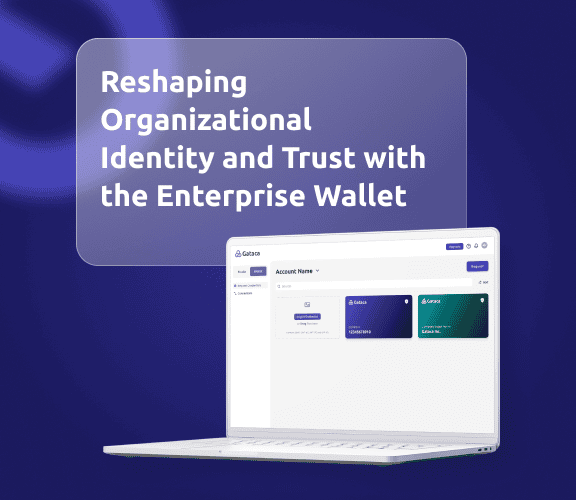
At Gataca, we’ve built the Gataca Enterprise Wallet solution specifically for organizations to securely share their information and reassure other parties they are dealing with the right organization.
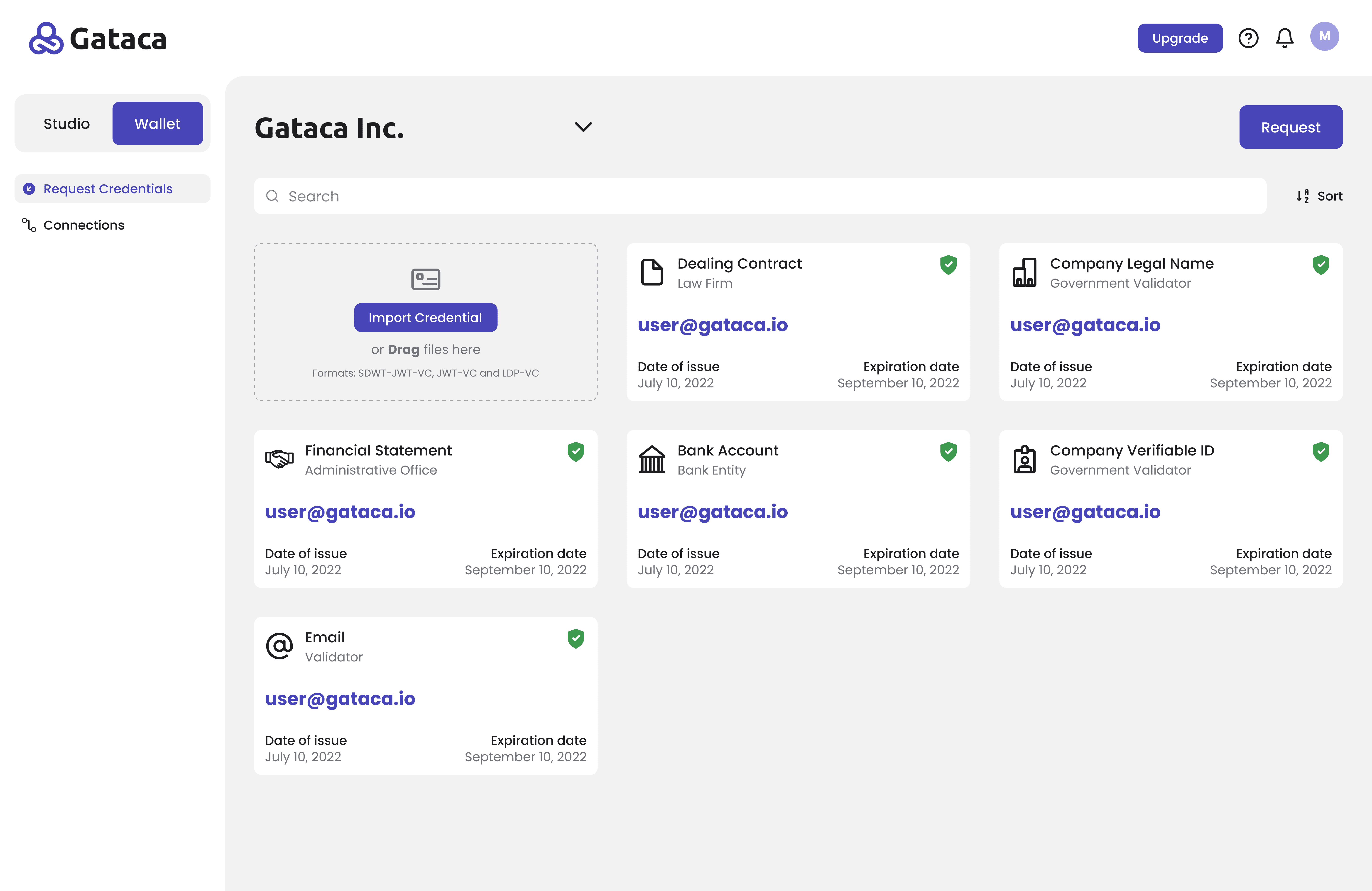
What can you do with the Enterprise Wallet?
- Store Verifiable Credentials
The Enterprise Wallet allows organizations to securely store and manage Verifiable Credentials (VCs), which are tamper-proof digital documents that verify an individual’s or organization’s identity, role, or qualifications.
In the context of legal entities, these credentials can include everything from business registration certificates and industry certifications to contracts and financial credentials.
- Sharing Verifiable Credentials
The Enterprise Wallet enables seamless sharing of credentials between parties.
When your entity needs to verify its information with another organization—such as during a business transaction or partnership negotiation—you can easily and securely share your verifiable credentials from the Enterprise Wallet.
The receiving party can then instantly verify these credentials, ensuring that the credentials are valid and were issued by a trusted source.
- Issue Credentials
Additionally, one of the features of the Enterprise Wallet is the ability for organizations to self-issue credentials using custom templates.
Gataca Studio and Enterprise Wallet: The Convo You Need
Now that you understand the value an Enterprise Wallet brings to organizations, why not take it a step further? Imagine not only storing and sharing credentials but also issuing, verifying, and managing them for both individuals and legal entities.
The Enterprise Wallet is a component of Gataca Studio, a decentralized identity platform which enables the issuance, verification, and management of verifiable credentials.
Gataca Studio allows organizations to issue credentials on-demand for employees, partners, and third parties.
For example, a company can issue verified employee cards to new hires, granting access to secure systems, or provide a certified business credential to a vendor, proving their authorization to resell goods on behalf of the company. This facilitates the credentialing processes, ensuring that only authorized individuals or entities have access to sensitive resources or systems.
On the verification side, organizations can instantly validate credentials issued by other entities, without needing to contact the issuer. This can be for identity verification and authentication of individuals or to confirm the credentials of other organizations—such as when entering into a legal agreement.
Additionally, Gataca Studio enables organizations to manage the entire lifecycle of credentials, ensuring they remain accurate and up-to-date. For instance, an employer can update an employee’s credentials to reflect a new position, department, or access level or an academic institution can update a student’s credentials when they earn additional certifications or degrees.
Gataca Studio also supports credential revocation and expiration, ensuring that only valid, current credentials are in circulation. This is especially useful for time-sensitive credentials, such as professional licenses or certifications, which require periodic renewal—or in cases where an employee leaves the company or a business license is suspended.
This complementary relationship between Gataca Studio and the Enterprise Wallet creates an end-to-end solution for managing credentials, supporting organizations' needs for secure, efficient identity and credential management.
eIDAS Organizational Identity
In Europe, the revised eIDAS regulation approved in May 2024 mandates that within the next 24 months, EU member states must provide their citizens, residents, and businesses with a European Digital Identity Wallet (EUDI Wallet) to identify themselves or provide confirmation of certain personal information.
Moreover, public organizations and private service providers that are required to implement strong user authentication for online identification will be obligated to accept these European Digital Identity Wallets as a valid authentication method.
Therefore, for legal entities, the regulation introduces the option to use an Organizational Identity Wallet. This wallet will hold verifiable credentials known as (Qualified) Electronic Attribute Attestations ((Q)EAA), which can be used to represent a legal entity. These credentials allow organizations to establish secure, trusted connections with other enterprise wallets, facilitating the exchange of verifiable credentials.
The Gataca Enterprise Wallet is fully aligned with the eIDAS regulation, offering comprehensive support for organizations to issue, verify, and manage verifiable credentials and positioning them to meet the upcoming requirements while enhancing secure digital interactions across Europe.
How Decentralized Identity Benefits Organizations
Using decentralized identity and an Enterprise Wallet offers organizations significant benefits.
- Efficiency in Verification Processes: Organizations can instantly share and verify the authenticity of credentials which helps speed up the time and reduce paperwork required to onboard new partners, vendors, or clients.
- Data Security and Privacy: ID wallets use biometrics, strong encryption, and distributed storage, enabling organizations to securely store and share sensitive business information. Moreover, the enterprise wallet allows selective disclosure, so organizations can share only the necessary data points (e.g., verify business registration without exposing financial records), reducing unnecessary exposure of sensitive information.
- Greater Trust: Decentralized identity enables cryptographically signed verifiable credentials, ensuring exchanged information is authentic and untampered. Organizations can, therefore, confidently share and verify business information, reducing risks of fraud and false documentation in agreements.
- Legal Compliance: By storing data in a decentralized manner and giving users control over it, organizations achieve compliance with privacy laws, like GDPR or eIDAS 2.0 in Europe, as data is accessed only with user consent. This approach keeps sensitive information secure with the individual or organization, simplifying regulatory compliance and reducing liability.
- Global Interoperability: Verifiable credentials adhere to international standards, ensuring they are recognized and accepted globally, ensuring businesses that they are dealing with verified individuals and entities, regardless of their geographic location. This fosters trust in global collaborations and reduces the risk of fraud or unauthorized access in international dealings.
- Reduced Costs: Enterprise wallets enable direct, real-time verification between businesses, eliminating the need for costly third-party services. This reduces operational expenses by minimizing manual checks, freeing up resources, and reducing data entry errors.
Use Cases of the Enterprise Wallet
The Enterprise Wallet opens up a wide array of practical applications for businesses. Here are some examples:
Supply Chain Verification
For companies that depend on complex supply chains, verifying the credentials of suppliers and partners is critical. The Enterprise Wallet allows businesses to verify the authenticity of their suppliers' credentials, such as compliance certifications, environmental standards, and business registrations.
This can be done quickly and securely, ensuring that every participant in the supply chain is compliant and trustworthy, reducing the risk of fraud or disruption.
Document Signing and Authentication
Companies often need to verify the authenticity of signed documents, such as contracts or service agreements. The Enterprise Wallet enables secure document signing and credential sharing, ensuring that both parties involved can verify the identity and authenticity of the signers.
This reduces the risk of forgery and ensures the integrity of the transaction, speeding up processes that traditionally relied on manual verification or third-party authentication.
Cross-Border Compliance
For multinational corporations operating across various jurisdictions, ensuring compliance with each country’s regulatory standards. The Enterprise Wallet allows companies to store and manage compliance documentation specific to each country, such as import/export licenses, regional certifications, and tax identification numbers. These credentials can be securely and quickly shared with customs or trade authorities as needed.
This reduces the need for physical paperwork and accelerates cross-border operations by enabling rapid verification across jurisdictions, helping businesses stay compliant while streamlining global trade processes.
Conclusion: A New Paradigm for Organizational Identity
The Enterprise Wallet represents a shift in how organizations manage and protect their digital identities.
By leveraging verifiable credentials, organizations can ensure that employees, vendors, partners, and themselves are authenticated seamlessly, creating an ecosystem of trust.
This shift toward decentralized identity management is more than just an operational upgrade—it’s a strategic advantage. As organizations continue to embrace the digital-first world, those that adopt tools like the Enterprise Wallet will be better equipped to protect their data, build trust, and foster seamless collaboration. In this new paradigm, identity is no longer just about authentication; it’s about unlocking new opportunities for growth, innovation, and resilience.

Esther Saurí
Digital Marketing