

8 min read
Everything you need to know about the EUDI Wallet
March 25, 2024
The European Digital Identity (EUDI), a key component of the recently approved eIDAS 2.0 regulation, is a cross-border digital identity initiative set to transform identity verification online.
Using an ID wallet, known as the EUDI Wallet, the European Digital Identity will allow users to identify and prove facts about themselves online in a simple, private, and secure manner.
It will be available to all citizens, residents, and businesses in the European Union in 2026—although some governments already have beta versions, while others are running pilot initiatives.
As an organization, you may be impacted by this regulation, having to accept EUDI Wallets as a new authentication method. In this article, we’ll look into the EUDI Wallet, why it is needed, and how to prepare for it with Gataca.
What is the European Digital Identity (EUDI) Wallet?
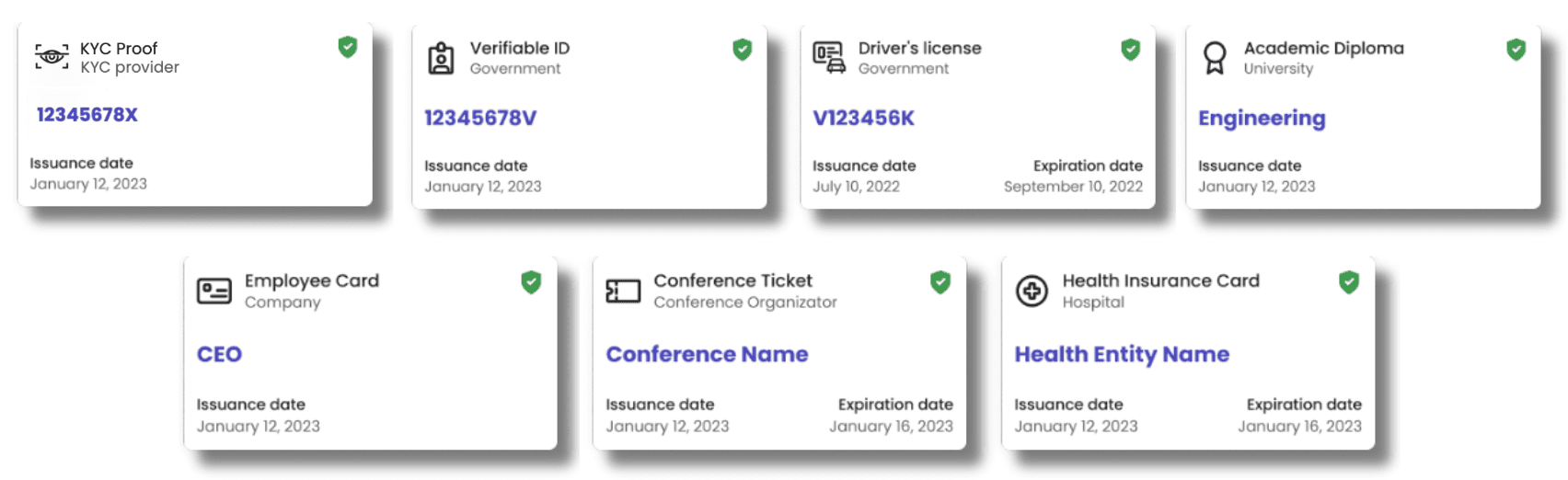
The EUDI Wallet is a free mobile app that the Member States will make available to both individuals and businesses to store and share verifiable credentials, which are digital documents and attestations for identification.
Therefore, the EUDI Wallet makes it easy for users in the European Union to prove their identity and share personal information online, whether for government services, online shopping, or other internet platforms.
Imagine it as the digital wallets you use for payments on your phone, such as Apple Pay or Google Pay, but going one step further, storing credentials like national IDs, passports, diplomas, health records, and more.
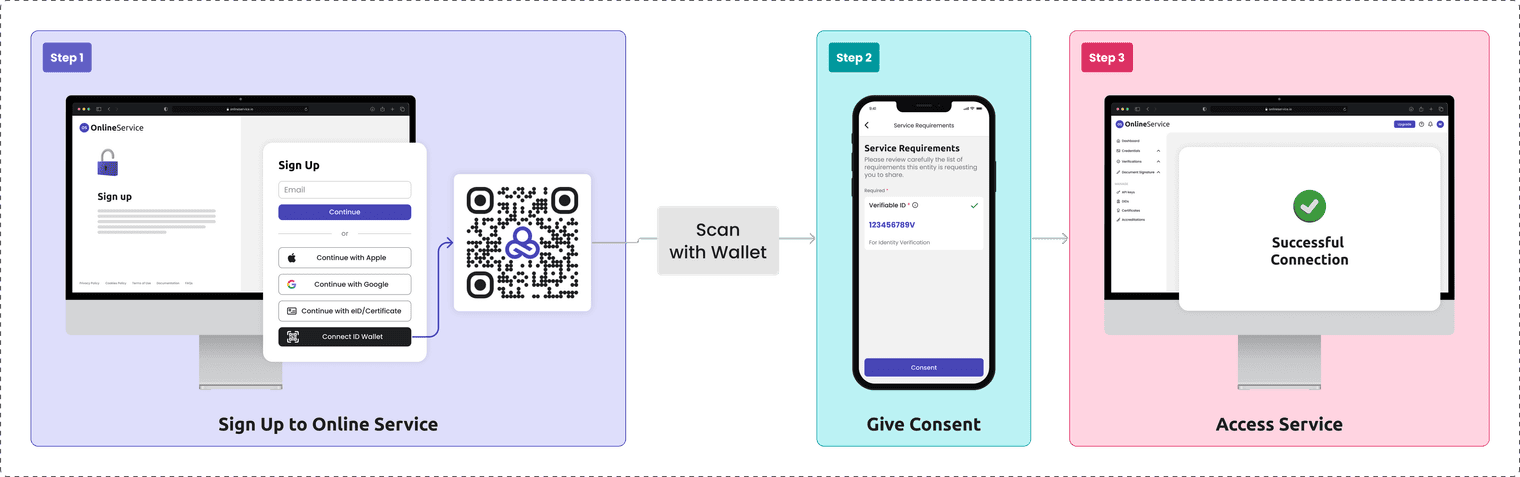
Additionally, with the utmost security and respect for privacy, the EUDI wallet will enable you to control your data across the web, letting you decide what information to share, with whom, and when.
According to the regulation, each member state can decide whether to develop its own wallet, mandate a specific wallet provider, or create an open market for private wallet providers while certifying selected solutions.
Nonetheless, all EUDI Wallets will be standardized across the EU and accepted by all member states, opening up new possibilities for cross-border activities.
Are EUDI Wallets replacing existing ID documents and digital identity systems?
It is important to note that the EUDI Wallet won't replace the current physical documents, as its usage is optional. Instead, it provides a portable and convenient digital version of these documents that is equally valid.
Also, for now, the EU Digital Identity Wallet won't replace existing identity management systems; it will work alongside them.
Must your organizations accept ID Wallets for authentication?
The European Digital Identity Wallet isn't just for government services.
Private service providers in industries like transportation, energy, banking, finance, social security, healthcare, telecoms, and education that use strong user authentication, as well as large online platforms with over 45 million users, must also accept and facilitate the use of European Digital Identity Wallets. The deadline for this is late 2027.
However, even if the regulation doesn't impact your business, it is important to note that the goal is to have over 80% of Europeans equipped with a digital wallet by 2030, so you would benefit from embracing them.
And this is not just in the European Union. Initiatives worldwide are adopting ID Wallets and verifiable credentials, suggesting global adoption and interoperability in the next years.
Why do we need the EUDI Wallet?
Existing digital ID systems in the EU have notable shortcomings, such as being limited to certain online services and lacking cross-border recognition.
Moreover, as digital transactions and interactions grow, so does digital crime. As a result, digital services often require lengthy and complicated identity verification processes to protect against cyberattacks, which affects the user experience.
On top of this, when apps or websites prompt us to create new accounts or sign in through other platforms like Google, we don’t really know what happens to our data.
To address these challenges, ID Wallets, particularly Self-Sovereign Identity Wallets, prioritize security, privacy, and user experience while ensuring interoperability, which is why the European Union introduced the EUDI Wallet.

Benefits of the EUDI Wallet
The advantages of using EUDI Wallets can vary depending on your situation, but one thing is certain: adopting them benefits both your organization and your clients.
Benefits for organizations
- Increase Security: EUDI Wallets use biometrics, strong encryption, and distributed storage to minimize the risk of large-scale data breaches.
- Enhance User Experience: ID Wallets give users passwordless access to online services, eliminating friction during onboarding and lowering abandonment rates.
- Slash Costs: Save costs by reducing operational expenses related to customer identity verification processes, compliance, and data storage.
- Reduce Identity Fraud: Verifiable credentials use advanced cryptography so you can automatically verify their data authenticity and issuer organization.
- Lower Admin Burden: Ease operational processes by reducing paperwork and verification hurdles.
Benefits for individuals
- Simple Identity Verification: ID Wallets eliminate the need to repeatedly provide the same info and facilitate identification online with just one click, speeding up verification.
- Cross-border Interoperability: The EUDI Wallet is designed to work seamlessly across different industries and countries, not limited to the European Union.
- Privacy and Control: Using an ID wallet, users gain greater control over their personal information, choosing what data to share and with whom.
- Top-notch security: Personal information stays secure as EUDI Wallets use strong cryptographic security.
What can you do with the EUDI Wallet?
The EUDI Wallet allows you to access a wide range of services and transactions across the European Union, both online and offline.
This includes applying for public services, opening bank accounts, university applications, proving your identity, storing medical prescriptions, or securing transactions without carrying paper copies of ID documents or dealing with scanned copies.
Practical Example
Imagine applying for a master's degree. Normally, this process involves sending multiple documents and lots of back-and-forth communication if anything's missing. Plus, cross-border programs like ERASMUS face challenges due to different document formats and language barriers.
With the European Digital Identity, a student would simply respond to the university's verification request by selecting the required documents stored in their wallet, all in a standard format. For example, the student might select a national ID and an Academic Diploma issued by the government and their educational institution.
The university instantly verifies the information using the already verified, cryptographically signed Verifiable Credentials. And just like that, the student is onboarded and granted access to the student portal for their Master’s degree—all in seconds!
The state of digital identity in the EU
Last reviewed: April 2026
Several Member States have launched national EUDI Wallet implementations ahead of the formal deadline, including France (France Identité), Austria (eAusweise), and Italy (IT-Wallet), and many others have announced their development.
For a more detailed snapshot of the EUDI Wallet initiatives, see our dedicated article → A Global Snapshot of ID Wallets
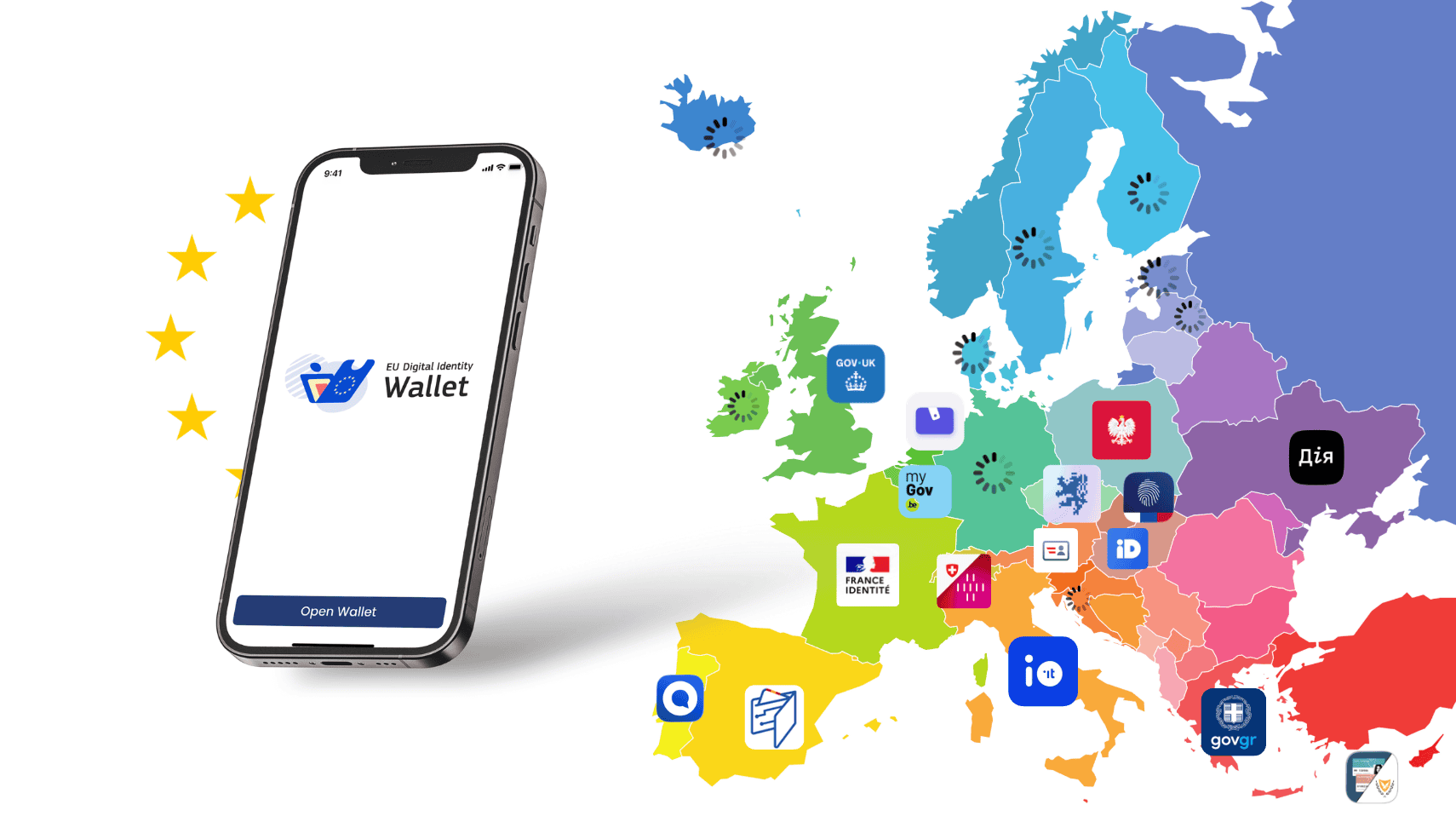
Additionally, Large Scale Pilots are testing the EUDI Wallet and providing real-world feedback shaping the final ARF specifications. Two Large Scale Pilots are currently active, with four having concluded their work.
Gataca participates currently in the WE BUILD Consortium and has previously been part of the DC4EU and VECTOR consortia.
Technical challenges
The Architecture and Reference Framework (ARF) (now in version 2.8 as of April 2026) is a collaboratively developed “toolbox” document that guides how to implement the EUDI Wallet in practice with architectural plans & best practices.
It is continuously refined via member State input, large scale pilots and industry feedback, but here are some ongoing debates:
W3C vs ISO
Two dominant standards for digital credentials, ISO/IEC 18013-5 (mDL) and the W3C Verifiable Credentials Data Model, are being discussed.
The EU plans to support both for the EUDI Wallet. However, finding ways for these seemingly incompatible standards to coexist and interoperate is under debate.
SD-JWT
There's a debate about the best method for implementing selective disclosure for Verifiable Credentials. Selective Disclosure for JSON Web Tokens (SD-JWTs) is the method selected in the EUDI Wallet ARF as it offers advantages in terms of ease of implementation and standardized formats.
However, other mechanisms, such as Monoclaim Credentials, BBS+ signatures, selective disclosure predicates, and zk-SNARKs, may provide more specialized capabilities or stronger privacy guarantees in specific use cases.
CAs vs DIDs
Certification Authorities (CAs) and Decentralized Identifiers (DIDs) represent contrasting approaches to managing digital identities within a Public Key Infrastructure (PKI).
The current debate is whether DIDs should be built on distributed ledger technologies like blockchain and centralized PKIs, bringing an intermediary perspective to these approaches.
Preparing for EUDI Wallets
Setting up authentication with digital identity wallets and being able to interact with all +27 EUDI Wallets is easier than you think and although the deadline for private organizations is in 2027, we recommend starting a pilot to test and refine your systems.
Solutions like the Gataca are already available and aligned with the EUDI wallet standards and requirements so you can start interacting with all available wallets for identity verification and authentication with full compliance of eIDAS 2.0.

Esther Saurí
Digital Marketing